AI in production.
Three AI assistants that give every answer with its source, used by professionals every working day, in fields where a confident wrong answer costs money, time or trust. One of them is our own product, so we faced the hard questions there first.
Our AI journey started with our own product.
Yessa is our practice software for Dutch veterinary clinics, used every day in the consulting room. Its AI assistant works alongside the vet during each appointment, recording what happens, structuring it and supporting the vet’s decisions while the animal is still on the table.
Yessa
veterinaryBecause Yessa is our own product, any mistake it makes is our problem first. That forced us to ask the hard questions early. What if the AI is confidently wrong in front of a pet owner? What does the vet need to see to catch it? Which decisions should always stay with the vet, even when the AI could make them? We answered these with our own money on the line, not in a workshop.
- ClientOur own product, for Dutch veterinary clinics
- SourcesThe appointment itself and the patient record
- Who decidesThe vet; the AI assistant records, structures and drafts
- The caseRead the Yessa case
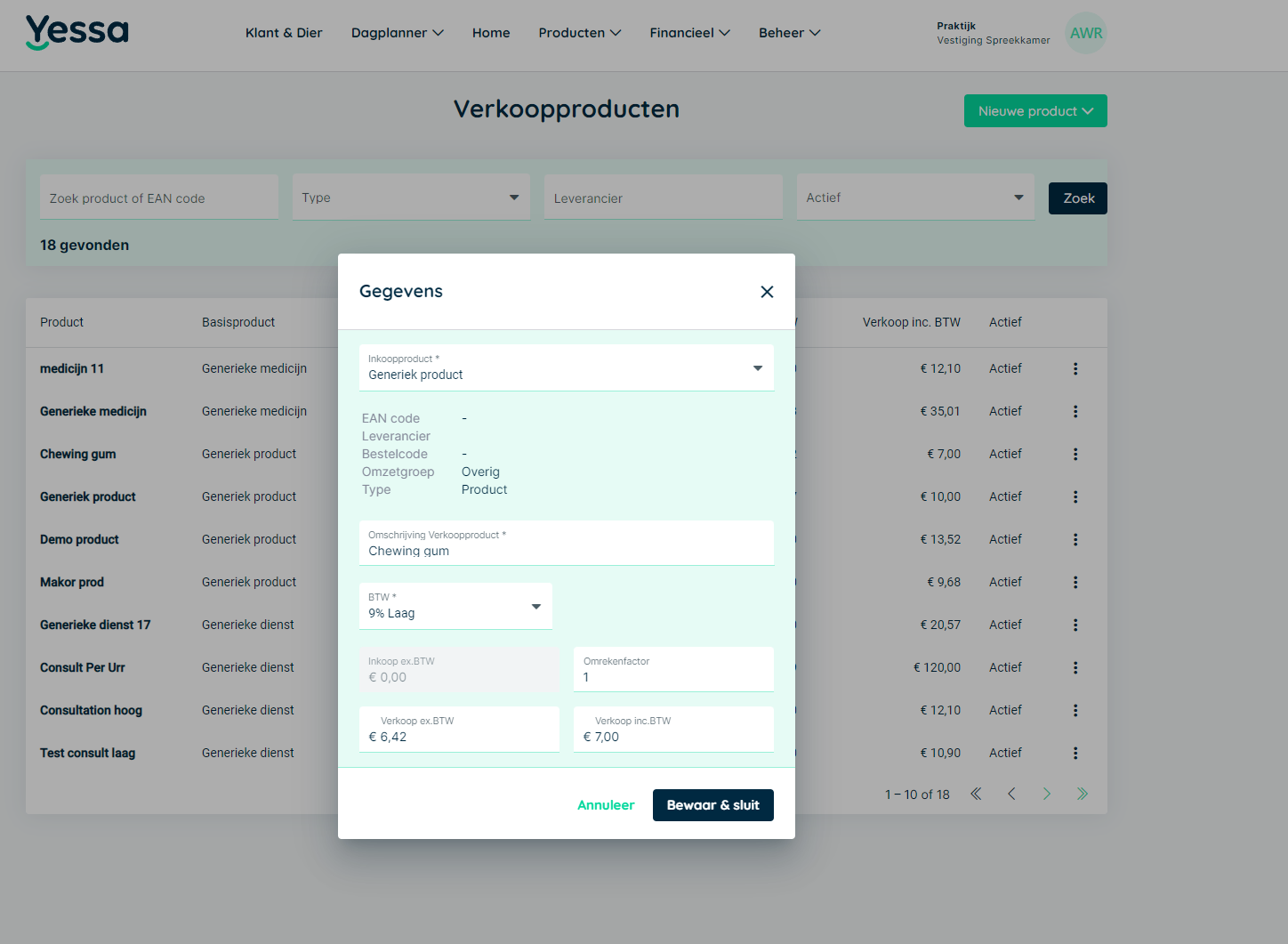
An AI assistant that provides a source with each answer.
Both client assistants follow the same rule: the source comes first, cleverness second. Each one works inside the material it knows, on top of a product that was already doing its job.
TEX
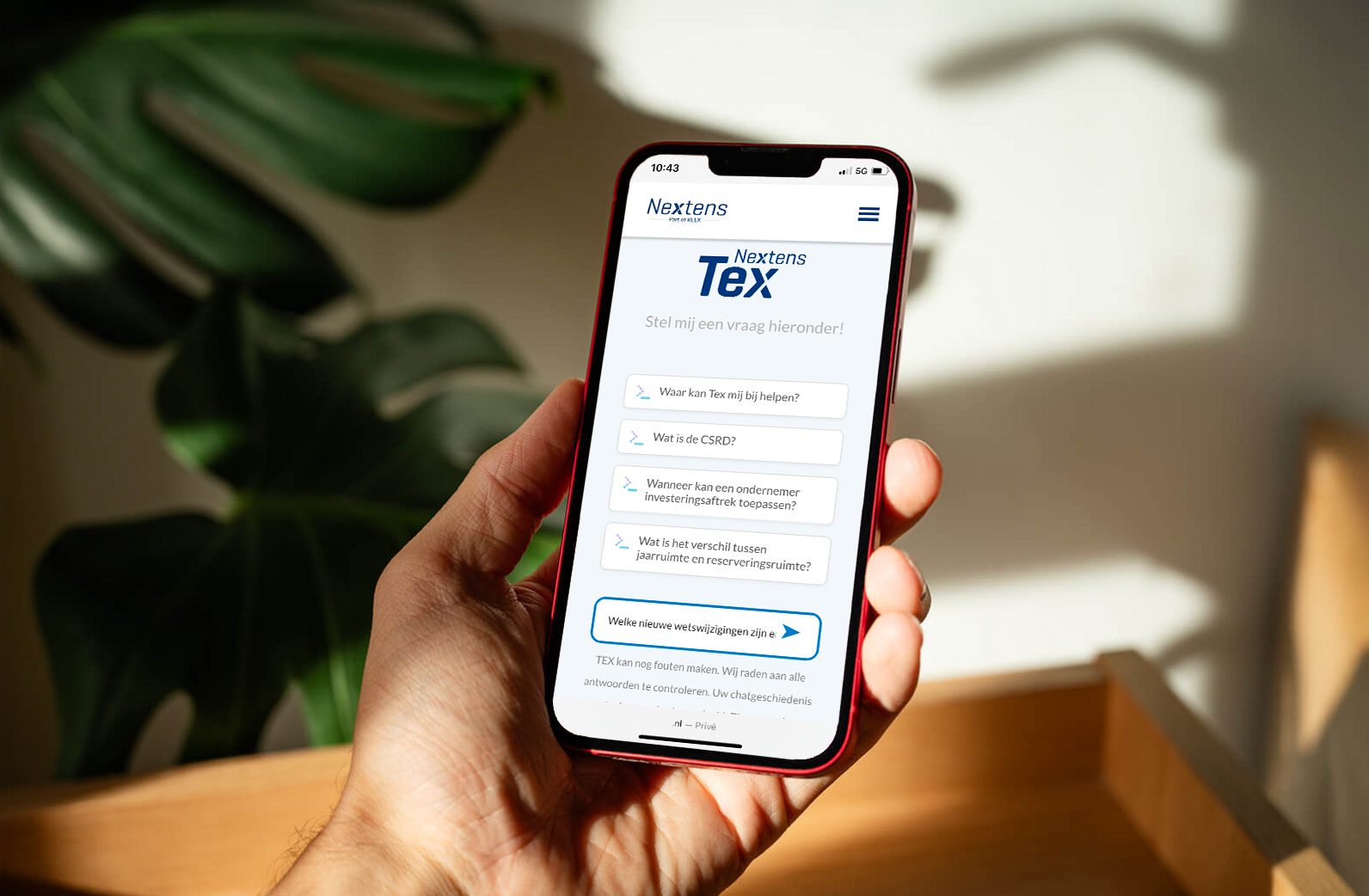
taxA tax assistant that searches tens of thousands of rulings and sources, where every answer traces back to the document it came from. A tax adviser uses an answer only once the source checks out, so traceability was the first product requirement, ahead of anything clever.
- ClientNextens
- SourcesNextens’ own tax knowledge base: tens of thousands of rulings, articles and templates
- Who decidesThe tax adviser, once the source checks out
- The caseRead the TEX case
Kai
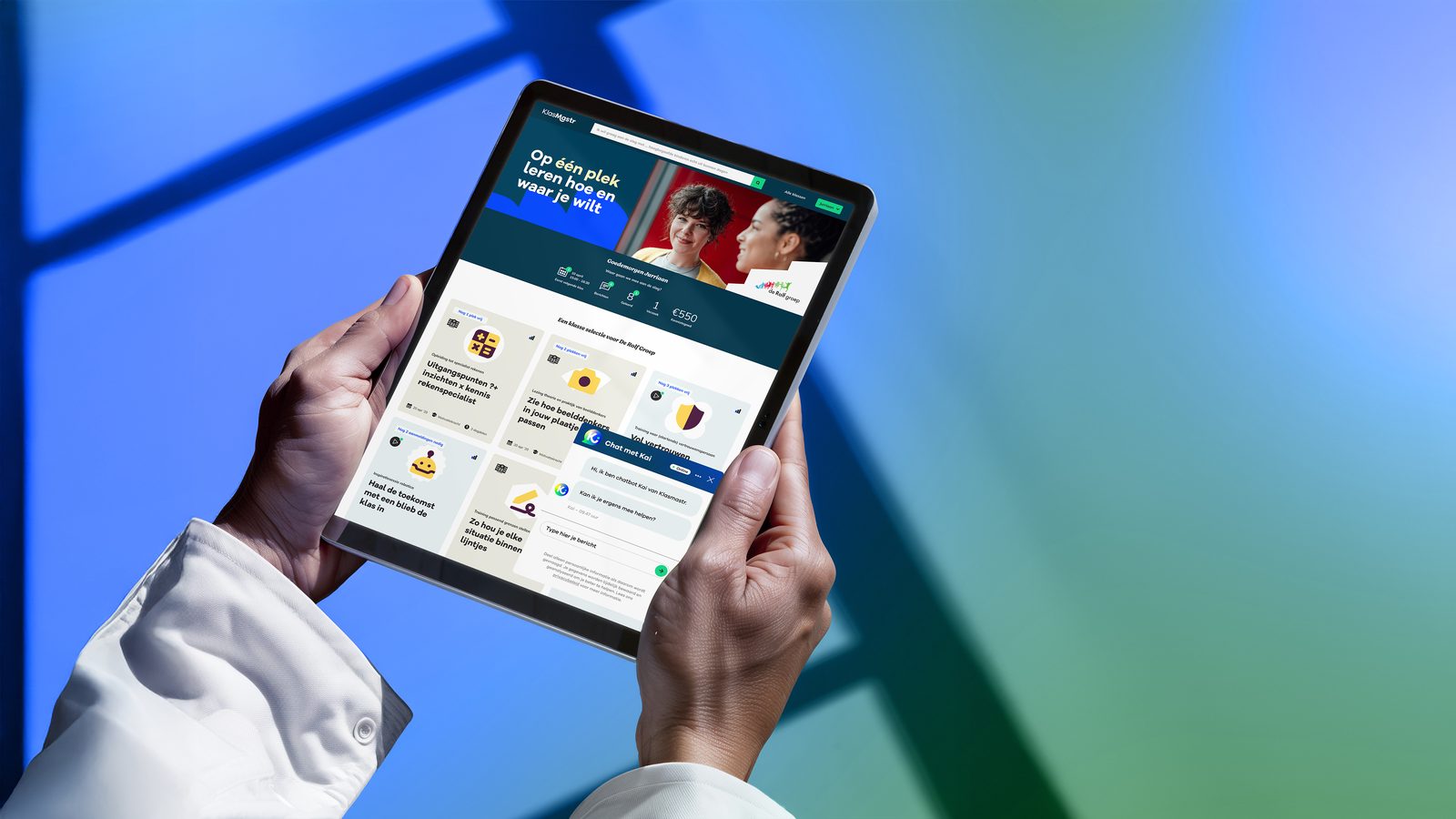
educationAn AI guide for teachers that recommends courses from the KlasMastr catalogue, based on each teacher’s learning history and role. It only helps with the material it knows, and says so when a question falls outside it.
- ClientDe Rolf Groep, for the KlasMastr platform
- SourcesThe KlasMastr course catalogue and the teacher’s own course history
- Who decidesThe teacher; Kai recommends and explains
- The caseRead the Kai case
The model prepares. A person decides.
For every AI assistant we build, we agree with you where the model’s work ends and a person takes over. We settle this in the first conversation and write it into the scope before we quote. The line usually falls in one of these four places:
Two more things are settled before we build. First, the cost: in the Factory Sprint we measure what each question costs, so you know the price of an answer before your users see it. Second, the AI Act: we assess the risk level of each use case up front, which determines what the assistant may do on its own. How we handle your data is explained on the security page.
The same engineering
These are business systems that happen to contain a model: built on the same foundation, behind the same gates, with the same people on call when something breaks at seven in the morning.
Twenty years of systems that had to keep running
Rail, parking, public transport, justice, education, healthcare, manufacturing. We are careful with AI because we have spent twenty years in places where an outage ruins somebody’s day long before a dashboard turns amber.
Find out where AI fits in your organisation.
Six weeks at a fixed price, and a secure MVP runs in European production. An assessment answers different questions; this one answers whether it can really be built here.
Ask us where the person decides.
It is the most revealing question, and for each of these three assistants the answer is specific and carefully considered. Show us your workflow and we will tell you which part AI can take on first and which part stays with your people.
Building AI people can trust