The challenge
The Netherlands is small and its roads are used intensively, so the layout of a junction matters, now and in the future. About twenty years ago, students and researchers at TU Delft built a tool that visualises traffic and predicts where bottlenecks and queues will form. Its large calculation module is still used by Rijkswaterstaat and its partners today.
“FOSIM lets Rijkswaterstaat simulate traffic at junctions and on slip roads. They put cars and other vehicles on the road in the simulation and see when it gets too busy and where queues form,” says Jeroen Warmerdam, project leader at Enigmatry. The tool is also used by developers of large infrastructure projects, and educational institutions may use it for research.
The system ran on an old operating system and old software. After a Windows update it might simply stop working.
Built for the Dutch road
“What sets the system apart is that it is fully tuned to the Dutch situation. Other tools can run simulations, but none is calibrated to Dutch road users. Users enter data about the traffic on the road, and the model knows how Dutch drivers behave: how quickly they overtake and accelerate, for example.”

Rebuilding the part that matters
Enigmatry took the system over from TU Delft about twelve years ago and is now developing a vital part of it further. “Rijkswaterstaat and Enigmatry decided to rebuild the system in part. That takes time, but it is worth it. About a year ago Rijkswaterstaat analysed how important the software is, and the conclusion was that its value for the development of Dutch roads is large. So they decided to invest. The nice thing is that we make the system future-proof and can take new applications into account at the same time.”
From desktop to web
FOSIM started as a desktop application, while most of what we build today runs in the browser. A web application is easier to reach and easier to change. The team chose to combine the two.
“The software is very calculation-heavy, so the user needs a machine that can carry it. That is why we are building a desktop application again. But our client wants the option to switch later, so the technology we use is that of a web application. Web development has grown a lot in recent years, there are more tools, and building a web interface is faster than building a desktop interface. So we build a web application and wrap it with the Electron framework. That makes it a desktop application today, and a web application whenever the client wants. It can already be tested in a browser.”
A new interface, the same calculation core
The team is not rebuilding everything. “We make a clear distinction between the user interface and the calculation core. The core calculates how Dutch drivers behave. That profile has been fine-tuned for fifteen years and is the strongest part of the system, so we leave it alone.” The core is being moved to C++ so that it no longer depends on a specific environment, as it did with Borland. The user interface, where users design the roads, is being rebuilt. That is what makes the system future-proof and leaves room for new applications.
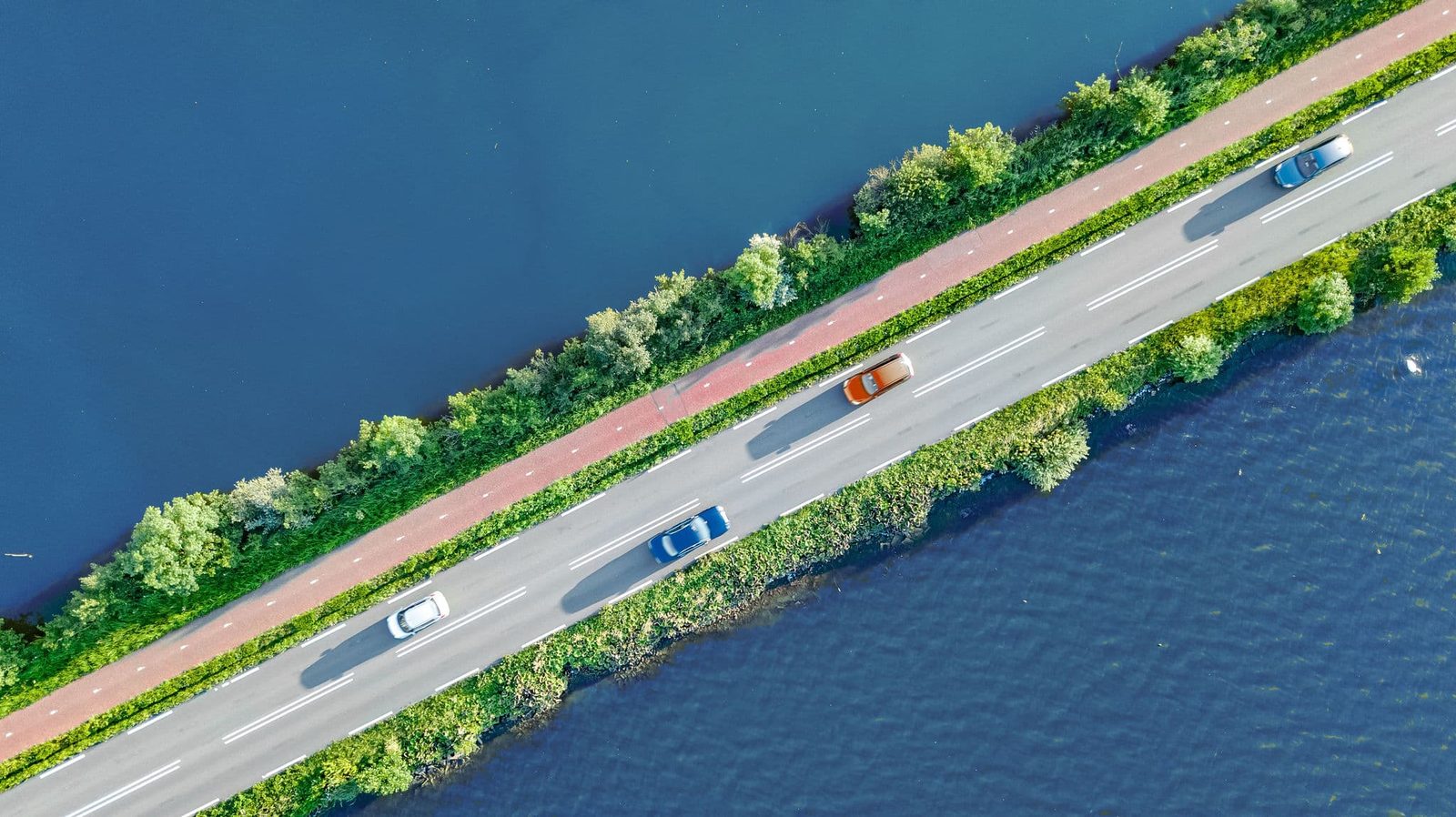
“We can already read old road configurations and show them on screen. The user can make every change that was possible before, and the first cars are driving. Proper testing still has to happen, also by the people who use it.”
One thing the team wants to improve is how lane-changing behaviour is shown. “The software predicts when the first drivers change lanes, and the point at which the rest realise they have to. The user can influence that behaviour by placing matrix signs or changing the road layout. That is possible today, and we want to make it clearer.”
The project started at the end of 2019, and the first results are visible. In the second half of 2020 the new FOSIM can be used for what it is meant for: fewer traffic jams.